Predictive Maintenance
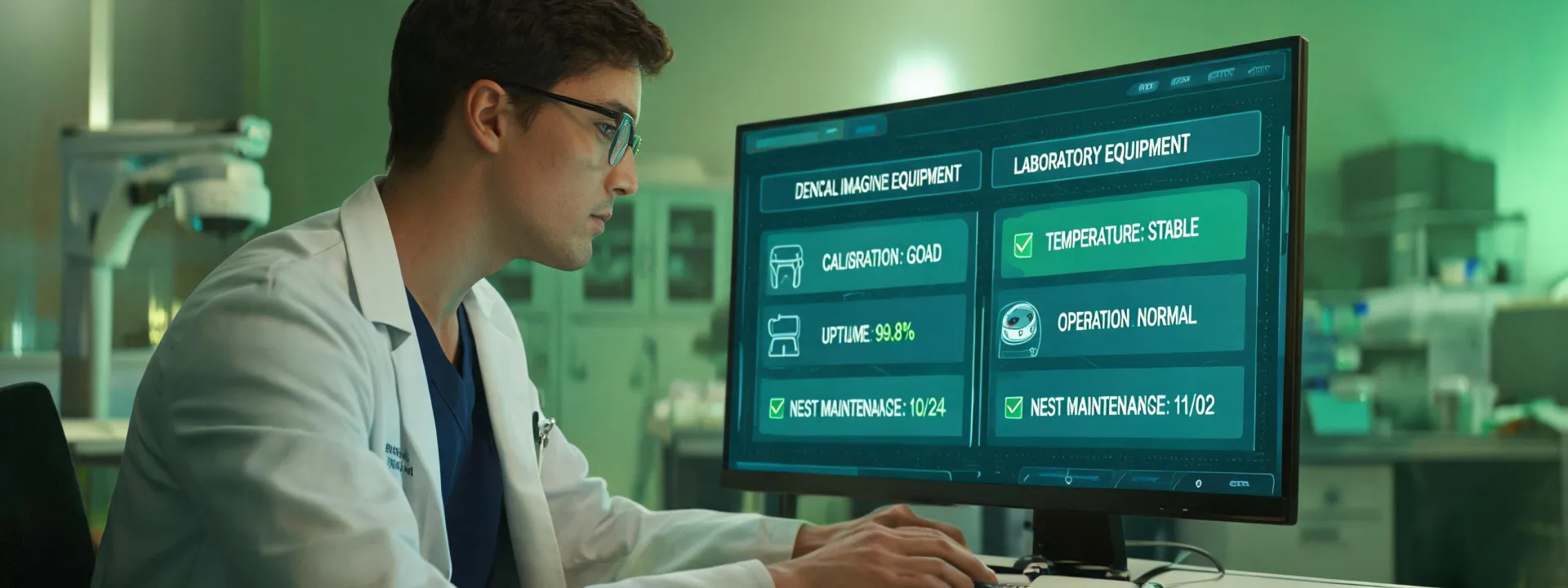
Use device telemetry and service history to forecast faults days ahead, then schedule parts and labor before unplanned downtime hits clinic or lab schedules.
Connected service planning
Define telemetry-driven maintenance, software change control under IEC 62304, cybersecurity response, DICOM / HL7 FHIR integration, and end-of-life migration before equipment enters routine use.
Service pillars
These pillars are planning categories for dental, laboratory, and imaging fleets—not a guarantee of identical coverage in every market.
Use device telemetry and service history to forecast faults days ahead, then schedule parts and labor before unplanned downtime hits clinic or lab schedules.
Document OTA or field updates with version lineage, validation ownership, rollback path, and release-note retention aligned to software lifecycle controls.
Establish SBOM access, vulnerability intake, triage targets, patch communication, and customer testing windows under FDA premarket cybersecurity expectations.
Prove modality worklist, result messaging, identity matching, exception queues, and downtime recovery with Epic, Cerner, MEDITECH, PACS, or VNA boundaries.
Track scan throughput, OR turnover, lab turnaround time, and dental chair utilization as operational KPIs—not as clinical outcome claims.
Plan notice periods, parts horizons, data export, UDI deregistration, decontamination, and validated replacement paths before sunset dates arrive.
Example acceptance gates
These are illustrative procurement gates for discussion. Replace them with agreed, model- and geography-specific terms.
Send the product family, site hours, integration boundary, loaner expectations, and required response model.
Scope the service review